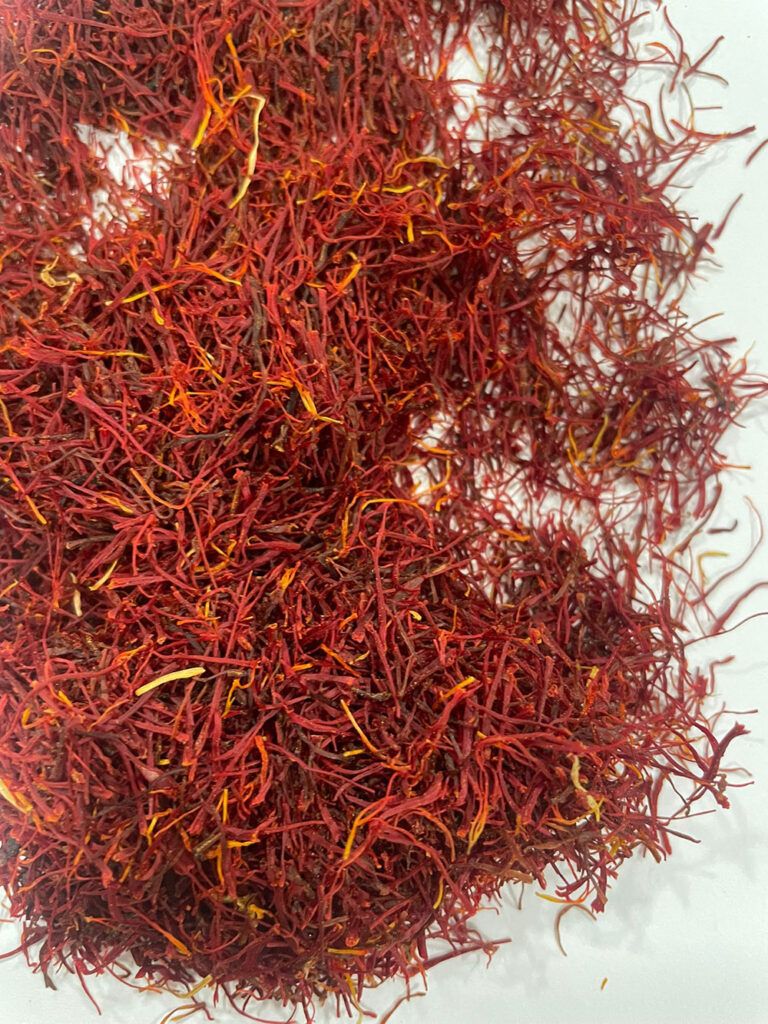
Over time, saffron adulteration methods have evolved from simple additions of foreign materials (like other plant stamens or petals) to more complex practices, and they continue to undermine the industry’s integrity.
The most advanced adulteration technique involves painting saffron styles with genuine saffron pigments, making them virtually indistinguishable from real stigmas. This practice is especially worrisome in the foodservice industry, where weaker quality controls allow adulterated saffron into kitchens, compromising quality under the guise of competitive pricing.
As saffron demand rose, especially in foodservice using bulk tins, adulteration methods advanced. Common tactics include adding fats or oils for weight, artificially boosting aroma with moisture, incorporating minerals like salt or sugar, or simply reducing saffron, all of which degrade its quality and compromise dishes.
How to Detect This Fraud
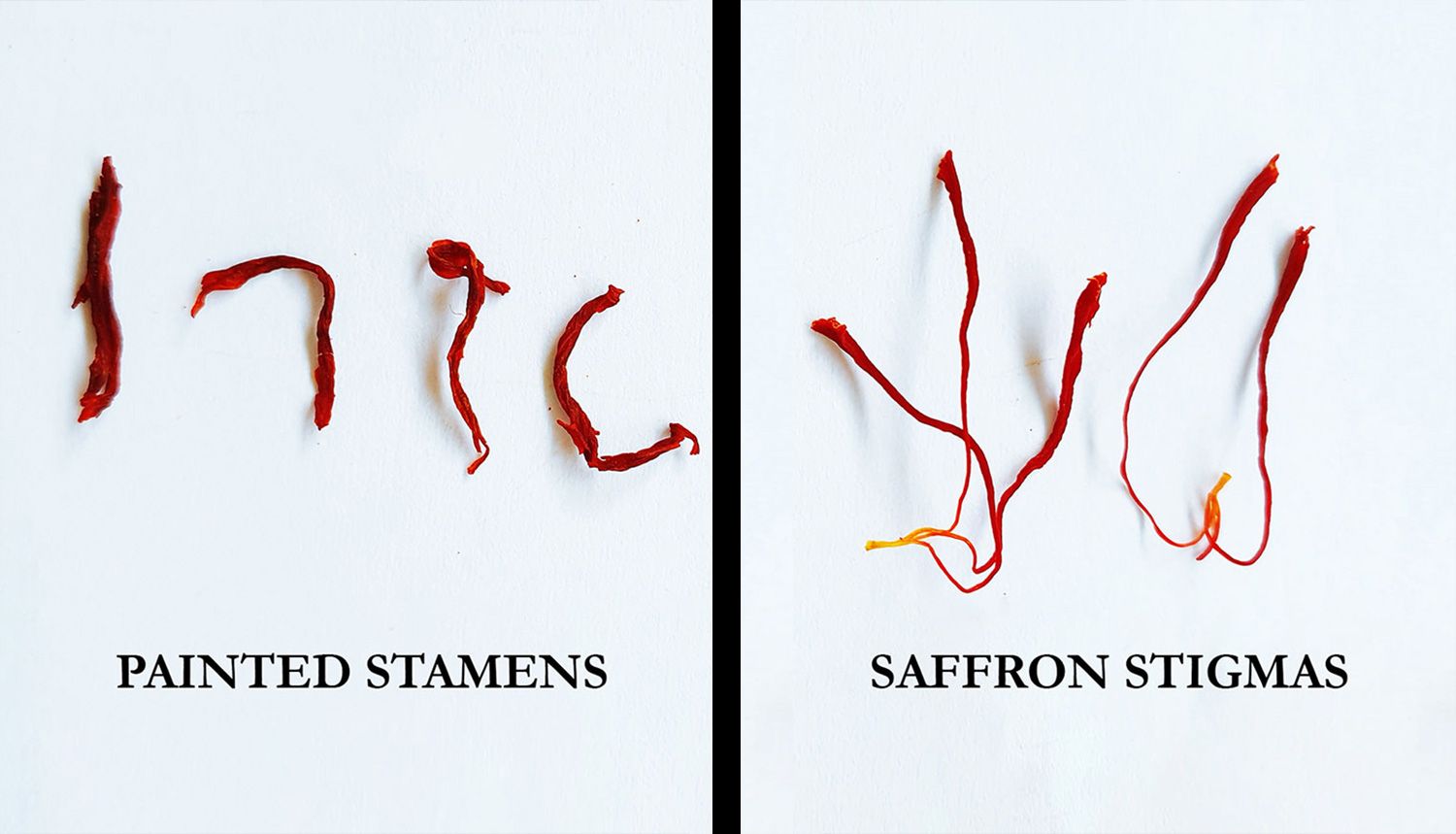
Identifying adulteration in saffron requires simple tests. A visual inspection can reveal the absence of the «head» at the tip of genuine stigmas or inconsistent color (e.g., dark saffron), often indicating fraud. When immersed in water, painted styles release color faster than authentic saffron, which blooms gradually.
Identifying Painted Styles: A Trained Eye and Simple Tests
Visual Clues: Painted styles lack the stigma’s distinct “head” and often appear uniformly dark.
Water Test: Genuine saffron gradually releases color, while painted strands quickly tint the water.
Filament by Filament: A Simple Tip to Spot Adulteration
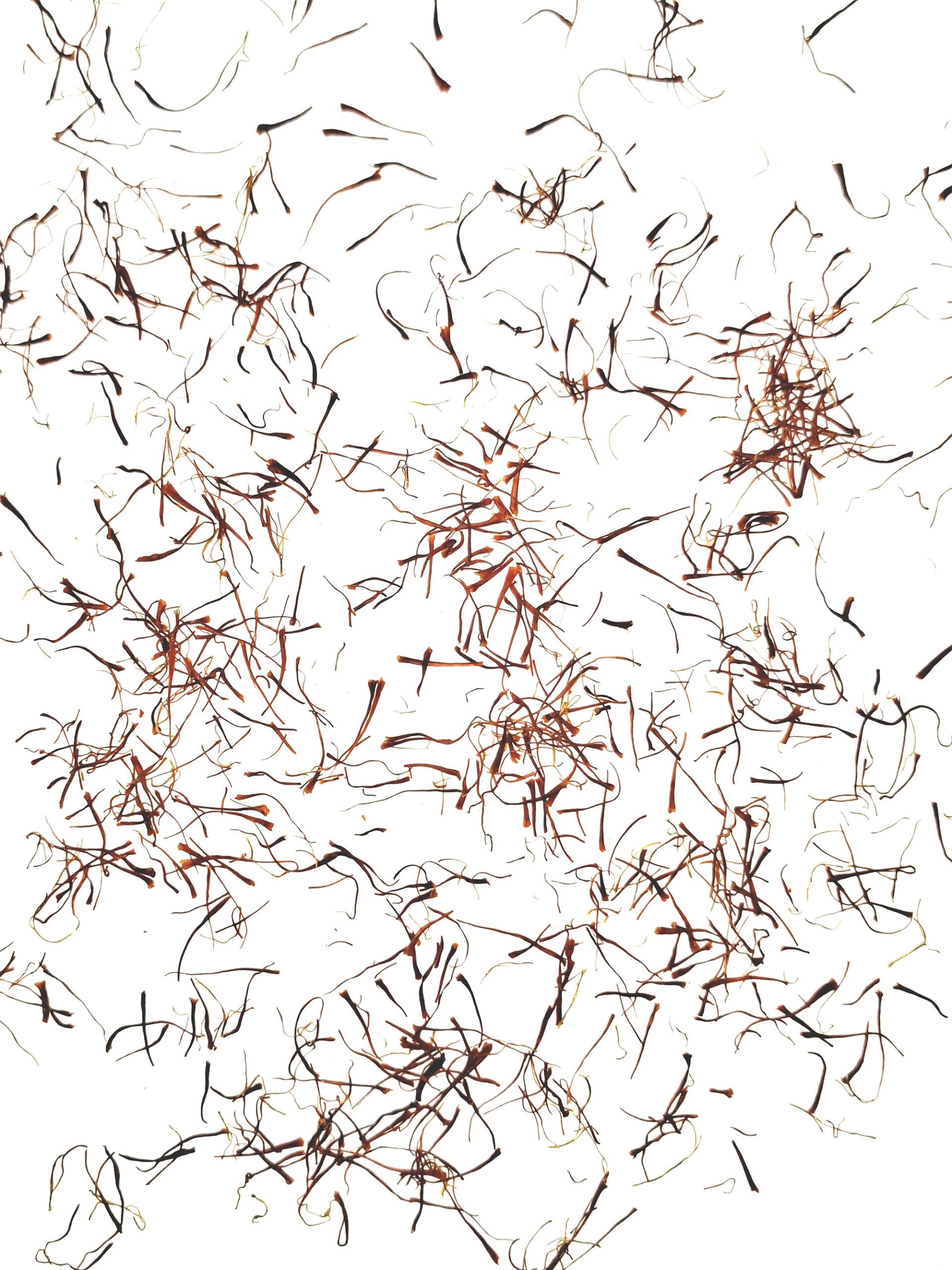
Spread a small pinch on a white surface and look for the “head” at each tip.
If most filaments lack this head, you may be dealing with adulterated saffron.
Example of Adulterated Saffron in the US (End of 2024)
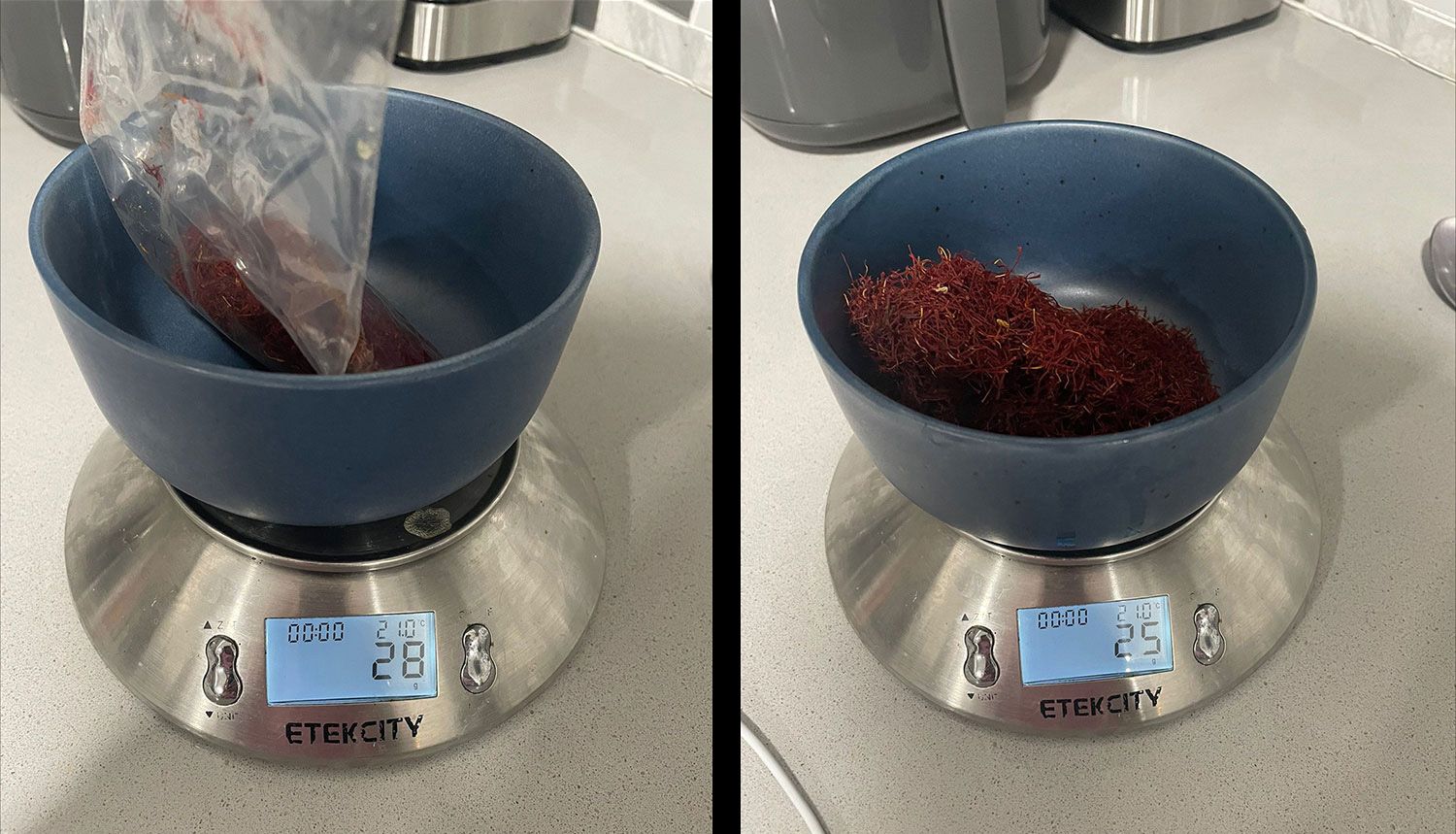
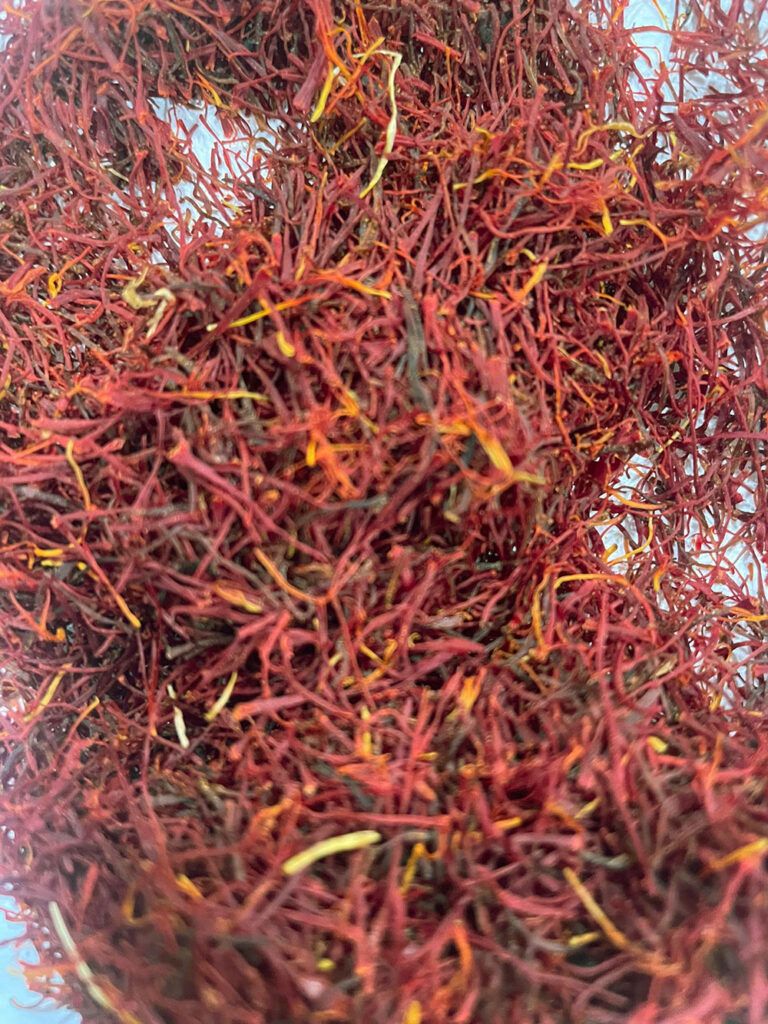
This one-ounce tin from a well-known Spanish brand in the North American foodservice market shows two distinct color tones:
Darker Portion: Manipulated floral waste (painted styles and other residues).
Lighter Portion: Red stigmas still attached to some yellow styles.
Its highly competitive price correlates with significant adulteration. Additionally, the tin’s actual net weight (25g) fell short of the claimed 28.35g, further indicating compromised quality.